AAL Logo
  • Home
  • Who we are
    • AAL overview
    • Board of Directors
    • Member Institutions
    • External Representatives
    • Committees
    • Annual reports
  • What we do
    • Optical Astronomy
      • AAT
      • ESO
      • GMT
      • Vera C. Rubin Observatory
    • Radio Astronomy
      • ASKAP
      • MWA
    • Gravitational Waves
      • Australian Gravitational Wave Observatory Initial Study
      • GWDC
    • High Energy Astrophysics
      • CTA
      • eROSITA
    • Data and Computing
      • ADACS
      • GWDC
      • HPC
      • ODC
    • Instrumentation
      • Astralis
    • Space Astronomy
      • Space astronomy – Australian involvement
      • eROSITA
    • International Engagement
      • ESO
      • GMT
      • eROSITA
      • CTA
      • Vera C. Rubin Observatory
    • Industry Engagement
      • Case studies
  • How we work
    • AAL Funding
    • Environmental, Social and Governance
  • News
  • Jobs
    • External Job Opportunities
  • Events
    • External meetings
    • Past Events
      • 2026 Australia/eROSITA-DE Collaboration Workshop
      • 2025 Australia/eROSITA-DE multi-wavelength school
      • First Results from the SRG/eROSITA All-Sky Survey: From Stars to Cosmology
      • 2024 Australian/eROSITA-DE Joint Collaboration Workshop
      • LSST Monthly Zoom Talks
      • Astronomy and Gravitational Wave Commercialisation Workshop
      • 2023 ACAMAR Workshop: Cosmic Magnetism
      • Australian LSST Workshop 2023
      • ACAMAR 9 Workshop
      • 2023 ACAMAR Workshop: Gas in Galaxies
      • 2023 Australian/eROSITA_DE Joint Collaboration Workshop
AAL Logo
  • Home
  • Who we are
    • AAL overview
    • Board of Directors
    • Member Institutions
    • External Representatives
    • Committees
    • Annual reports
  • What we do
    • Optical Astronomy
      • AAT
      • ESO
      • GMT
      • Vera C. Rubin Observatory
    • Radio Astronomy
      • ASKAP
      • MWA
    • Gravitational Waves
      • Australian Gravitational Wave Observatory Initial Study
      • GWDC
    • High Energy Astrophysics
      • CTA
      • eROSITA
    • Data and Computing
      • ADACS
      • GWDC
      • HPC
      • ODC
    • Instrumentation
      • Astralis
    • Space Astronomy
      • Space astronomy – Australian involvement
      • eROSITA
    • International Engagement
      • ESO
      • GMT
      • eROSITA
      • CTA
      • Vera C. Rubin Observatory
    • Industry Engagement
      • Case studies
  • How we work
    • AAL Funding
    • Environmental, Social and Governance
  • News
  • Jobs
    • External Job Opportunities
  • Events
    • External meetings
    • Past Events
      • 2026 Australia/eROSITA-DE Collaboration Workshop
      • 2025 Australia/eROSITA-DE multi-wavelength school
      • First Results from the SRG/eROSITA All-Sky Survey: From Stars to Cosmology
      • 2024 Australian/eROSITA-DE Joint Collaboration Workshop
      • LSST Monthly Zoom Talks
      • Astronomy and Gravitational Wave Commercialisation Workshop
      • 2023 ACAMAR Workshop: Cosmic Magnetism
      • Australian LSST Workshop 2023
      • ACAMAR 9 Workshop
      • 2023 ACAMAR Workshop: Gas in Galaxies
      • 2023 Australian/eROSITA_DE Joint Collaboration Workshop
  • Introduction
  • ESO
  • GWDC
  • MWA
  • Astralis
  • Rubin Observatory / LSST
  • Industry Engagement

Tag

xray
0 events found.

xray

  1. Events
  2. xray

Events for 17 January 2022

Notice
No events scheduled for 17 January 2022. Jump to the next upcoming events.
Notice
No events scheduled for 17 January 2022. Jump to the next upcoming events.

Events Search and Views Navigation

Event Views Navigation

  • List
  • Month
  • Day
Today
  • Previous Day
  • Next Day
  • Google Calendar
  • iCalendar
  • Outlook 365
  • Outlook Live
  • Export .ics file
  • Export Outlook .ics file
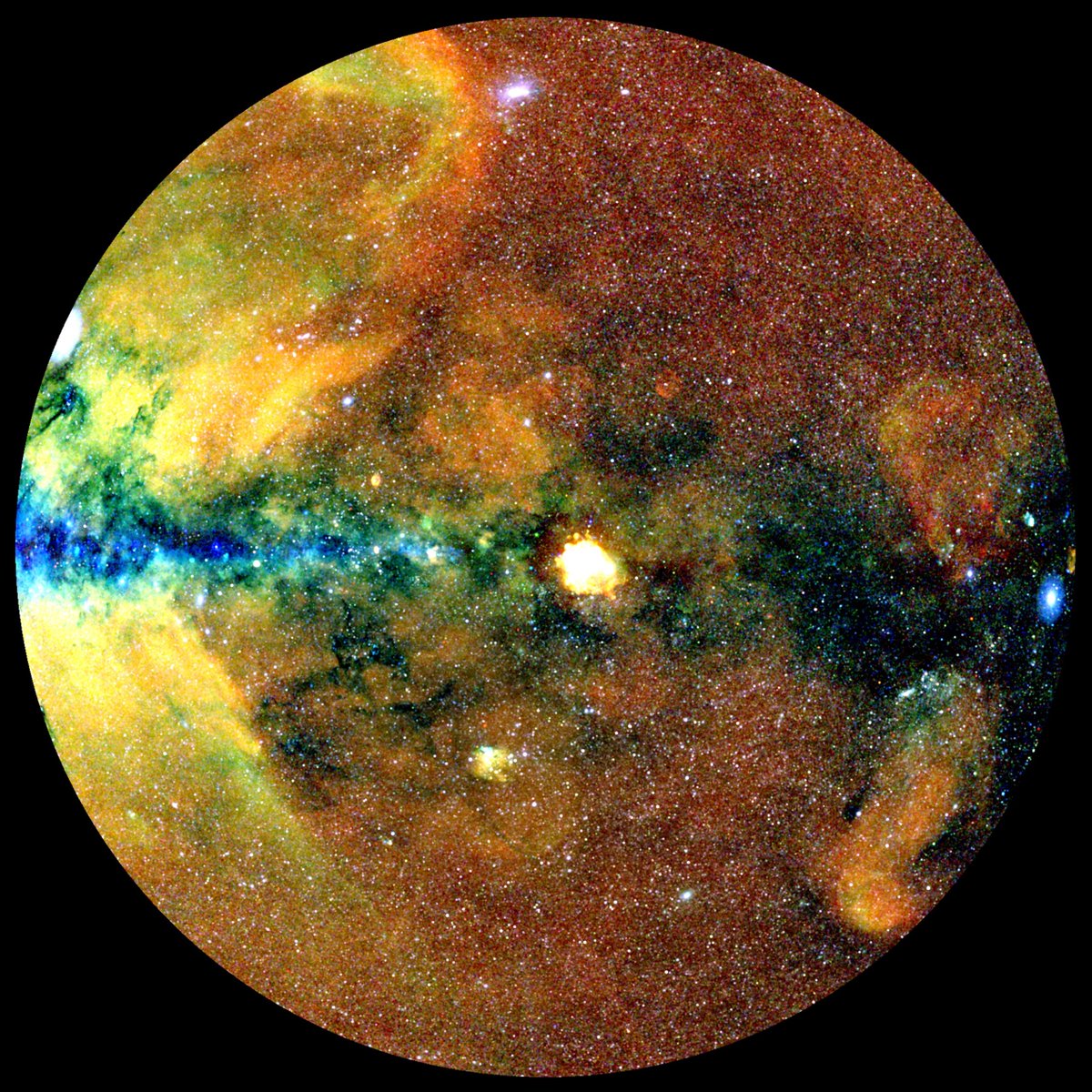
This image shows half of the X-ray sky, projected onto a circle (so-called Zenit Equal Area projection) with the centre of the Milky Way on the left and the galactic plane running horizontally. Photons have been colour-coded according to their energy (red for energies 0.3-0.6 keV, green for 0.6-1 keV, blue for 1-2.3 keV). Credit: MPE, J. Sanders for the eROSITA consortium.

Data from the first all-sky survey by the X-ray imaging telescope eROSITA has been released, yielding the largest X-ray catalogue ever published. A series of scientific papers were also released along with the data, including two led by Australian researchers Dr Adelle Goodwin and PhD student Silvia Mantovanini from International Centre for Radio Astronomy Research (ICRAR), Curtin University.

Lead investigators Dr Goodwin and Mantovanini combined the X-ray data from eROSITA with optical and radio data from Australian surveys to get deeper insights into high energy cosmic phenomena.

For her part, Dr Goodwin and her collaborators watched a supermassive black hole destroy a star. While incredible enough, it is also astonishing that the event took place at the centre of a galaxy 1.3 billion light years away. The destruction was first observed as a bright X-ray source by eROSITA. Dr Goodwin and her collaborators then used a radio telescope – the Australia Telescope Compact Array – to track the stars’ debris, ejected by the black hole over two years as it moved through the galaxy. These observations informed the researchers how the star was destroyed and how the black hole spat out the material as the star was consumed. It also gave the researchers excellent information about the central region of this distant galaxy. See Dr Goodwin’s paper here.

Dr Goodwin watched a supermassive black hole destroy a star, located at the center of a galaxy 1.3 billion light years away. The team of researchers managed to track the stars' debris, ejected by the black hole over 2 years as it moved through the galaxy. Image credit: DESY, Science Communication Lab.

For Mantovanini and her collaborators, eROSITA’s observations allowed the identification of a supernova remnant in our own Milky Way galaxy. A supernova remnant refers to all the material and energy left behind after the explosion of a star at the end of its life. Using several radio surveys, the team were able to confirm that the X-ray diffuse structure observed by eROSITA was indeed a supernova remnant. See Mantovanini’s paper here.

The supernova remnant as seen by Mantovanini and her team using eROSITA in the x-ray (green and red) and radio (blue) data overlaid. Credit: Mantovanini et al., 2024.

AAL is proud to support Australian-based astronomers and institutions via the agreement that made this collaboration possible, signed between AAL and the German eROSITA Consortium (eROSITA-DE). Find out more about the collaboration here.

The fourth Australian/eROSITA-DE Joint Collaboration Workshop will be held between 25-27 March 2024, for more information please see AAL’s event page.

For more information on the latest data release, please see this Max-Planck Institute for Extraterrestrial Physics (MPE) press release.

eROSITA stands for extended Roentgen Survey with an Imaging Telescope Array. It is an X-ray instrument built for the Russian-German mission launched on the Russian Spekt-RG spacecraft on 13 July 2019. 

Email: info@astronomyaustralia.org.au
See our Staff page for individual contact details.

Follow us:  

AAL Melbourne Office
Rooms 828 and 829, Level 8
Advanced Manufacturing and Design Centre (AMDC)
Swinburne University of Technology
John Street, Hawthorn, VIC, 3122

Hosted by Swinburne University

Postal address:
P.O. Box 2100, Hawthorn VIC 3122

AAL Sydney Office
105 Delhi Road
Macquarie University
North Ryde, NSW, 2113

Hosted by AAO-Macquarie

Copyright 2026, Astronomy Australia Ltd. All Right Reserved.